Sample Slides
A selection of sample slides from my teaching.
The slides are drawn from lectures for my introductory courses.
Click any slide to enlarge.
#1|PHLA10 · Reason & Truth
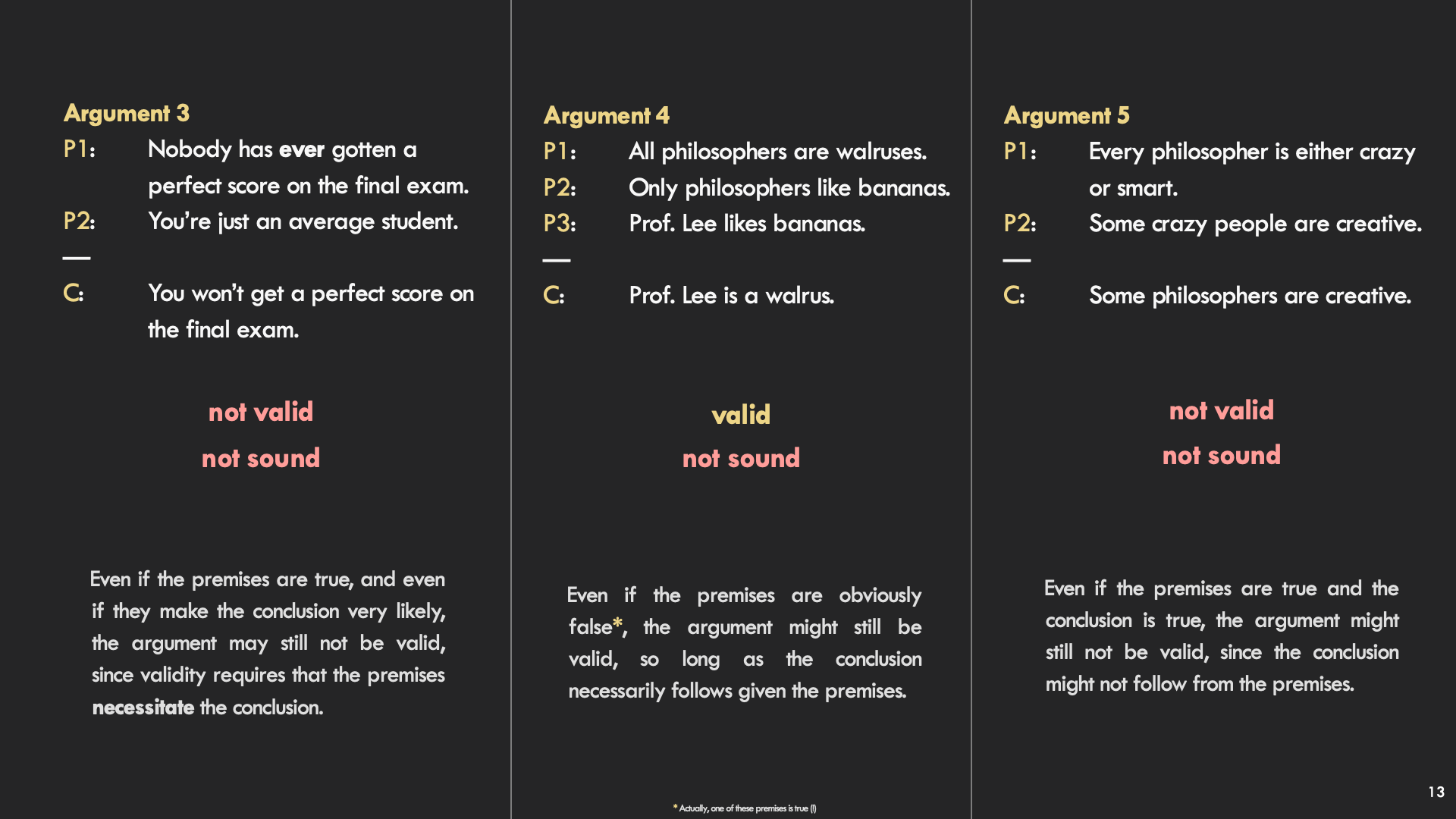
Arguments Three example arguments illustrating validity and soundness.
Arguments
#2|PHLA10 · Reason & Truth
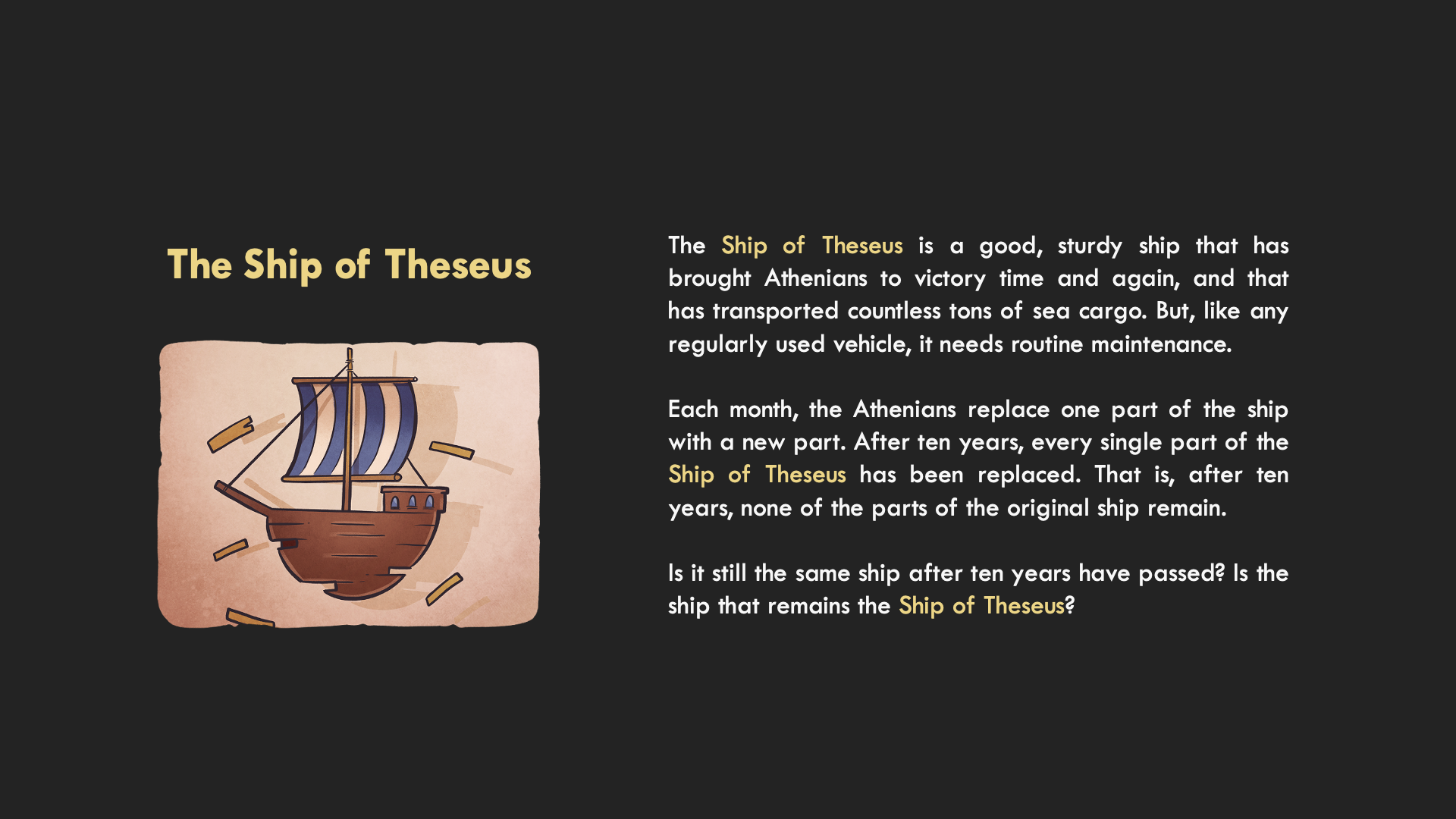
The Ship of Theseus A classic thought-experiment about the identity conditions of material objects.
The Ship of Theseus
#3|PHLA10 · Reason & Truth
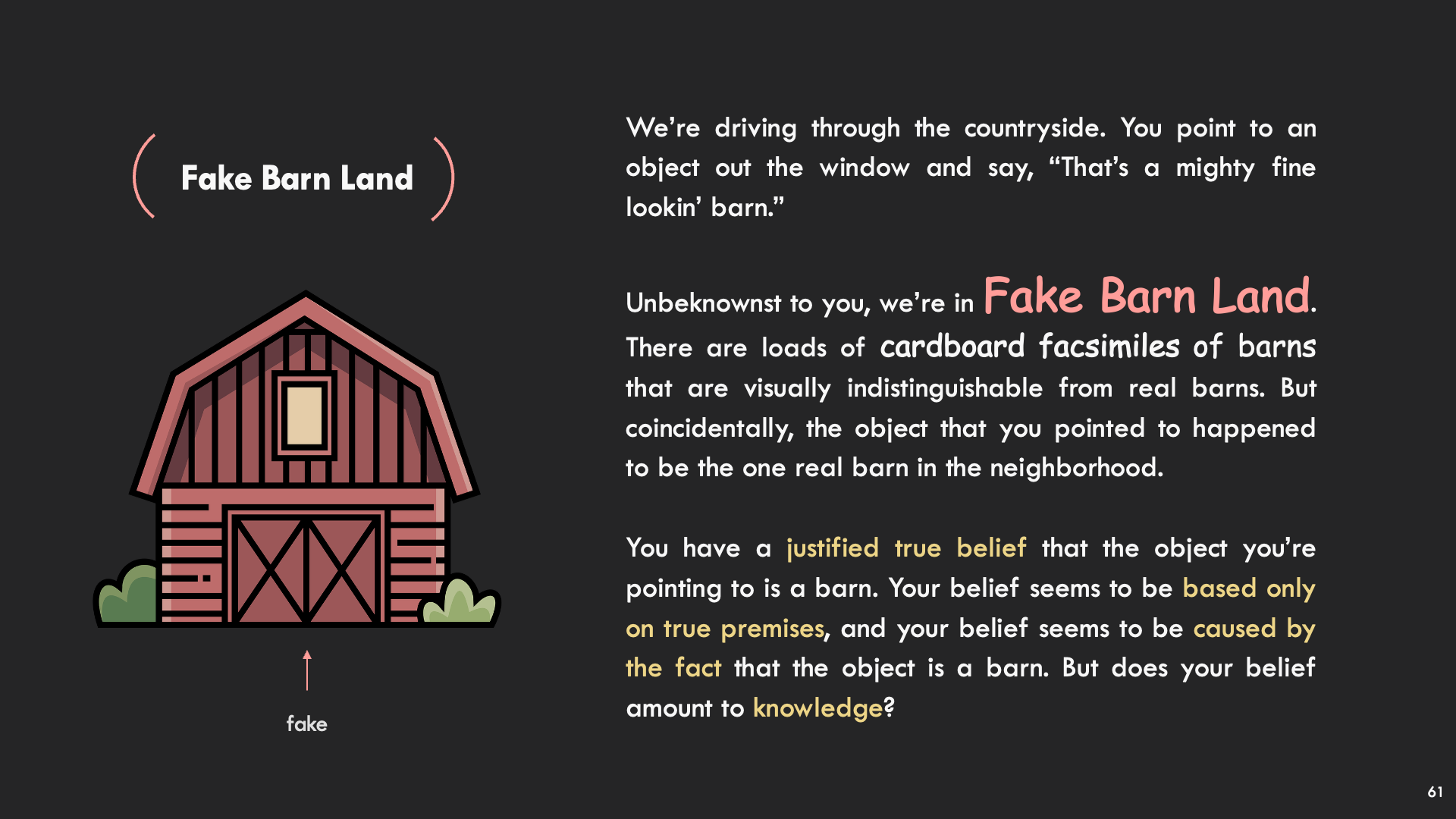
Fake Barn Land A famous thought-experiment involving fake barns, real barns, and whether justified true belief is enough for knowledge.
Fake Barn Land
#4|PHLA10 · Reason & Truth
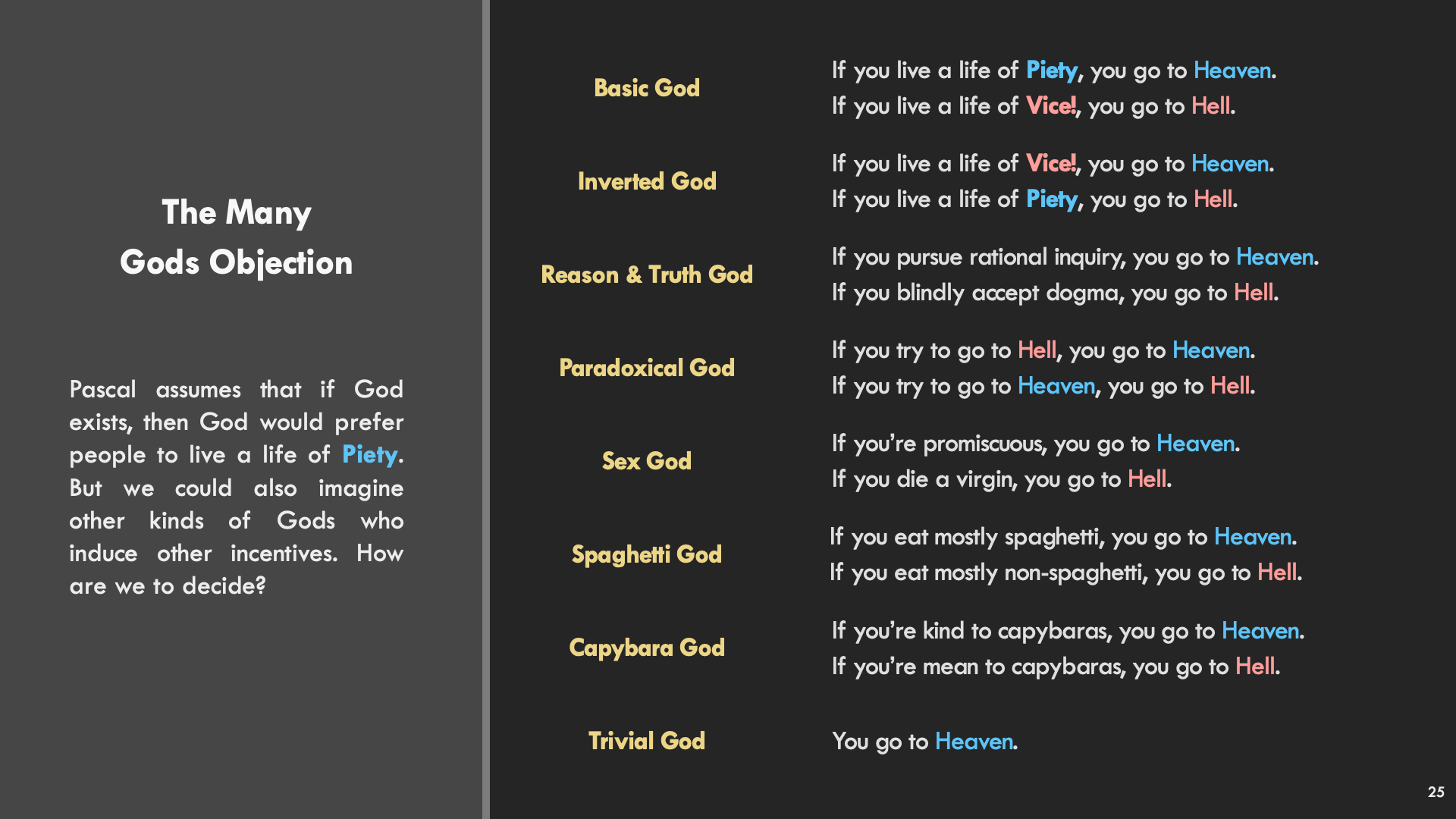
The Many Gods Objection If we can imagine any kind of God, Pascal's Wager loses its force.
The Many Gods Objection
#5|PHLA10 · Reason & Truth
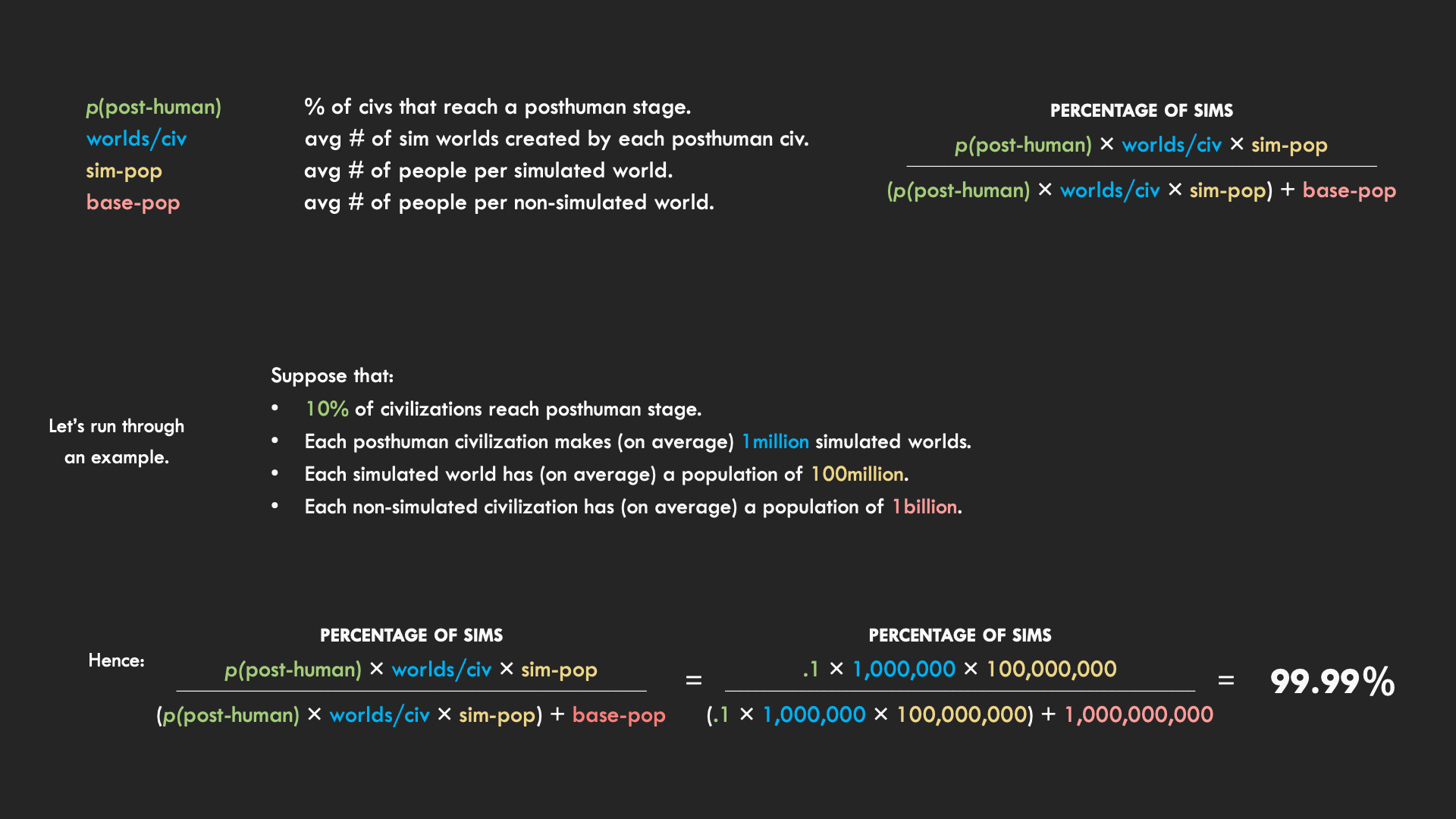
The Simulation Argument A mathematical formulation of the probability that you're a simulation.
The Simulation Argument
#6|PHLA10 · Reason & Truth
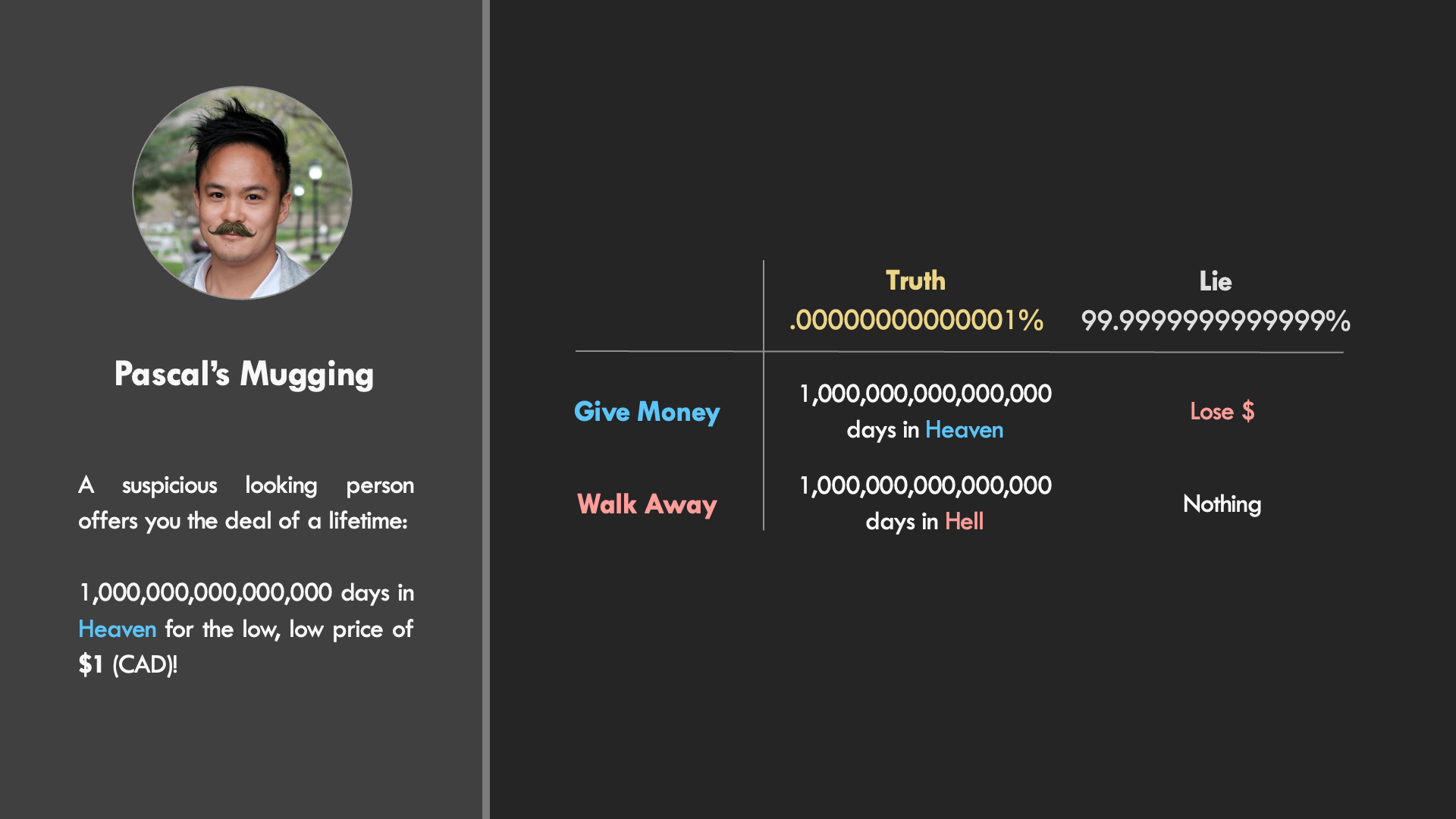
Pascal's Mugging A decision-theoretic problem involving tiny probabilities and enormous payoffs.
Pascal's Mugging
#7|PHLB55 · Puzzles & Paradoxes
Newcomb's Problem A live classroom demonstration with extra credit at stake.
Newcomb's Problem
#8|PHLA10 · Reason & Truth
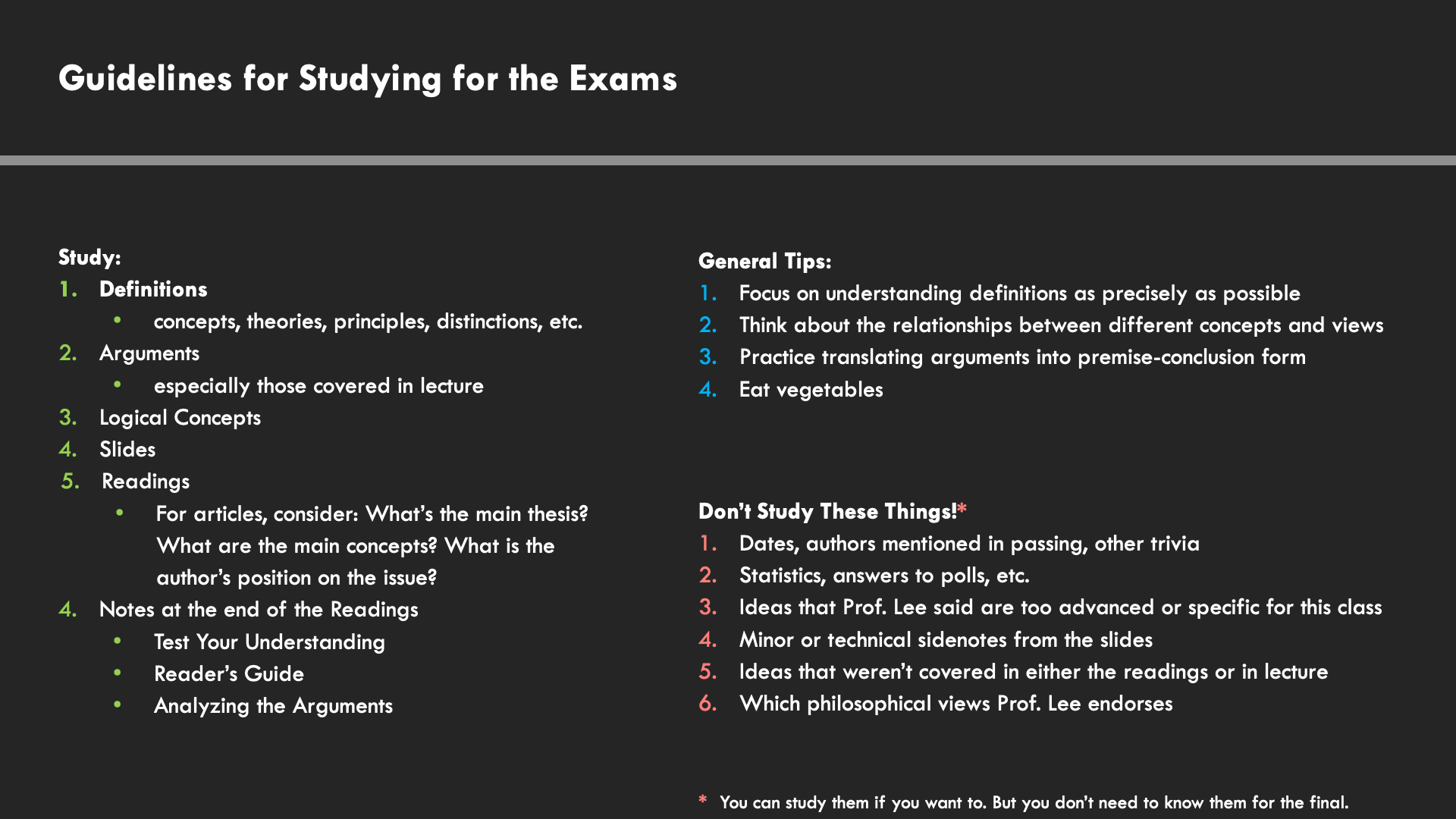
Guidelines for Studying for the Exams A practical study guide on how to prepare for the course exams.
Guidelines for Studying for the Exams
#9|PHLA10 · Reason & Truth
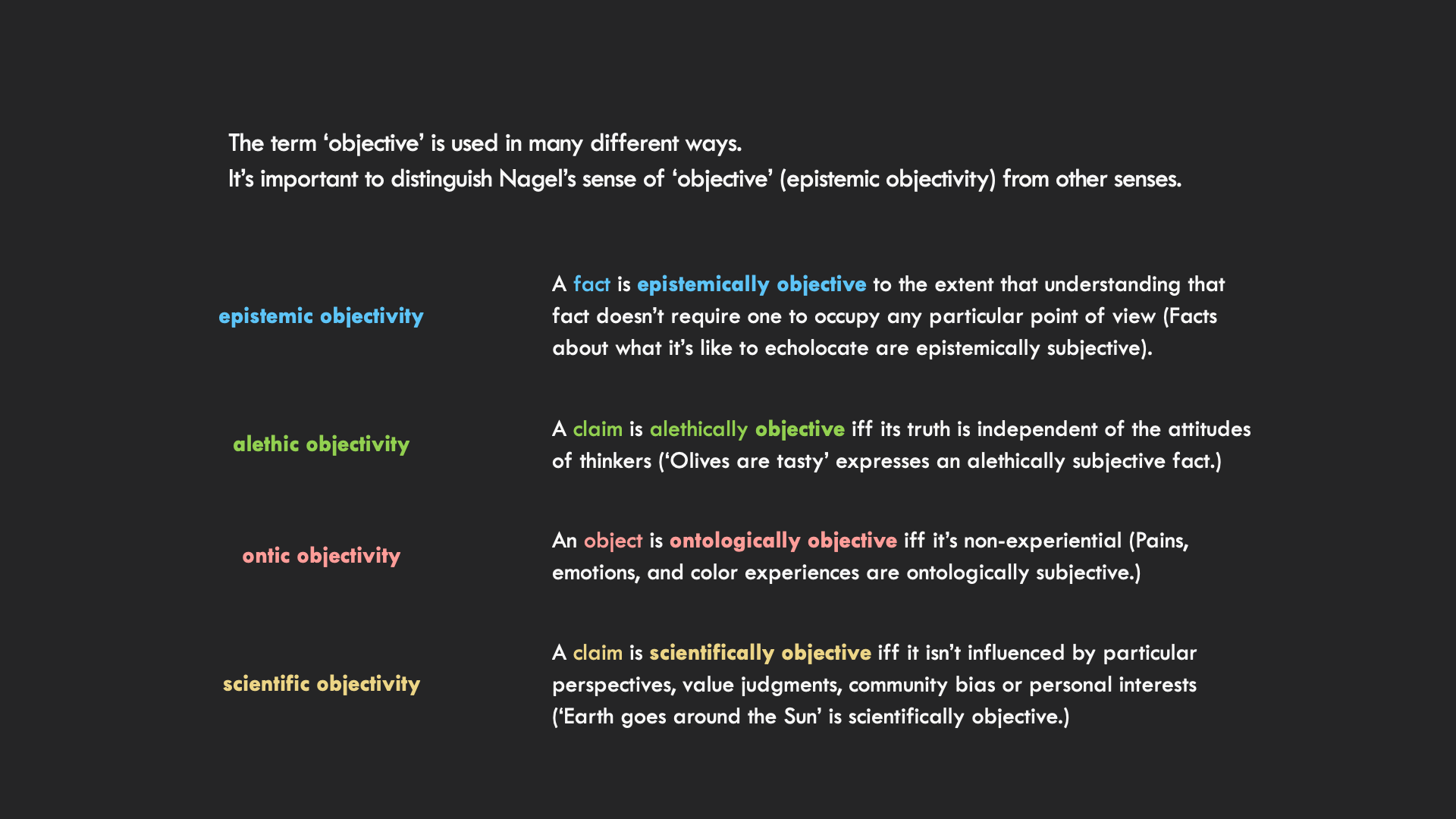
Objectivity Four senses of 'objective'.
Objectivity
#10|PHLA10 · Reason & Truth
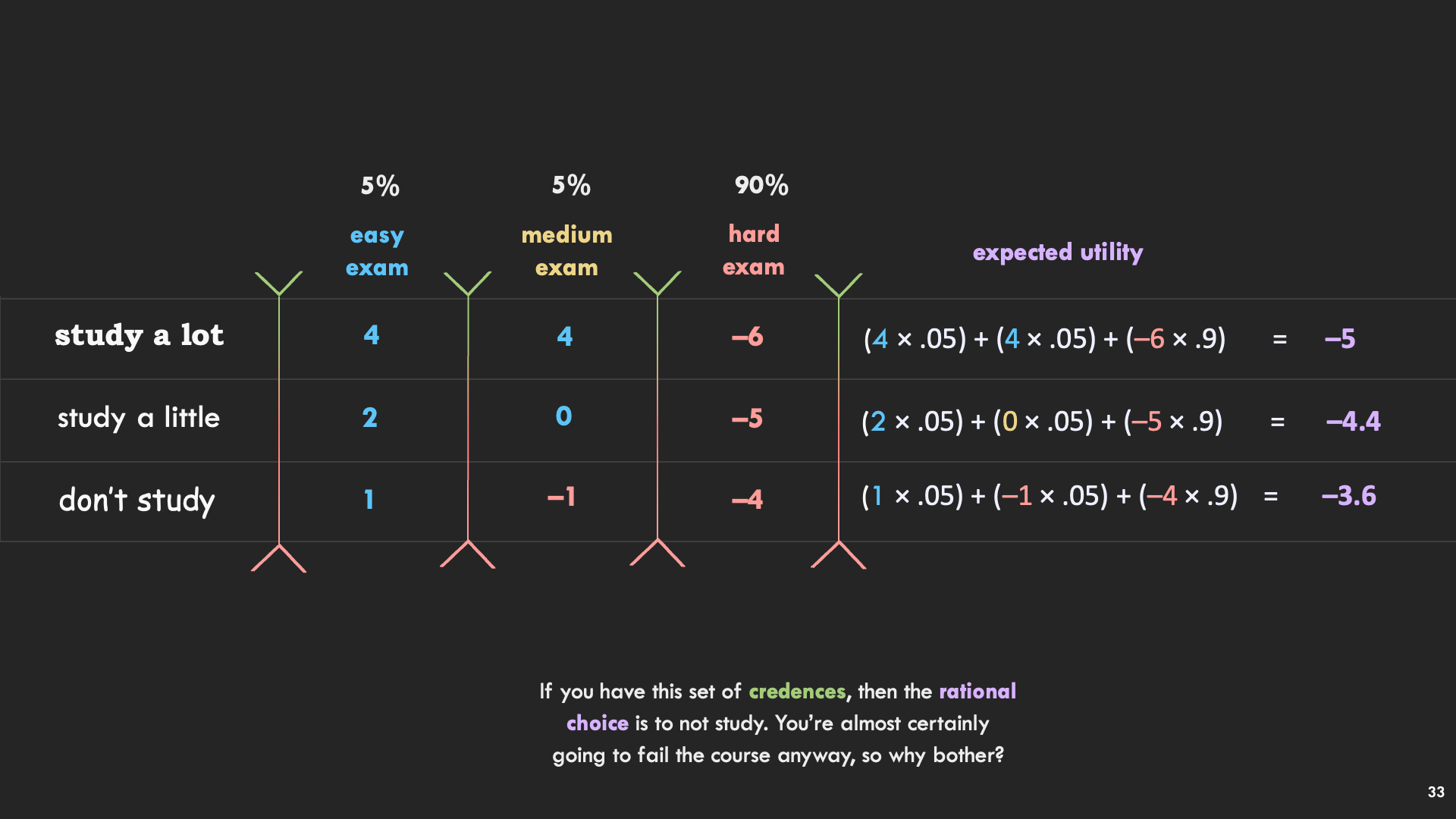
Expected Utility A decision-theoretic table illustrating how rational choice depends on credences and utilities.
Expected Utility
selected problems
A selection of sample problems from my teaching.

These problems appeared either in problem sets or in exams.
If you’re one of my current students: don’t expect these to show up on any of the exams!

#1 PHLA10 · Reason & Truth
Delicious Professors
A logical problem to reinforce the concept of consistency.

Evaluate the following set of sentences for consistency.

  1. Some professors are liars.
  2. Every professor is either a liar or a walrus.
  3. If someone is a walrus, then they are blubbery.
  4. All blubbery things are delicious.
  5. Some professors are delicious.
#2 PHLB55 · Puzzles & Paradoxes
Sequential Cash Accumulation Model
A problem in entrepreneurial finance.

Prof. Lee has been asked to teach a business course. It’s surprisingly popular: in fact, there are infinitely many students enrolled. During class, he pitches his “Sequential Cash Accumulation Model,” a business plan that he claims will allow everyone in the class to make some cash money.

Here’s the plan. We first assign each student who wants to join the business plan to a unique natural number, starting with 1 and ascending in order. Then we do business:

Student #1 gives $1 to Prof. Lee.
Then Student #2 gives $2 to Student #1.
Then Student #3 gives $3 to Student #2…
In general, Student #n gives $n but receives $(n + 1).
(Assume each student has unlimited credit, and that the bank allows interest-free overdrafts while these transfers are processed).

It sounds intriguing, but it also sounds kind of like a SCAM. Other students are similarly wary. In fact, you know that only about 1 in 100 students plan to do business with Prof. Lee.

Will this plan work? Why or why not?

#3 PHLB55 · Puzzles & Paradoxes
The Tortoise’s Ultramarathon
A problem about limits and infinite sequences.

The Tortoise is running an ultramarathon. The entire race is 100 kilometers long. The Tortoise is very slow. Initially, its speed is 1 meter per minute. Furthermore, the Tortoise gradually grows more tired: after each minute, its speed decreases. That is, for every n, the Tortoise’s speed at minute n + 1 is less than its speed at minute n, and its maximum speed during the whole race is its initial speed (1 meter per minute). Is it possible for the Tortoise to finish the race? Explain why or why not.

#4 PHLB55 · Puzzles & Paradoxes
The Devil’s Arithmetic
An open-ended philosophical puzzle about infinite sums.

After living a very fun life of Vice!, you find yourself in Hell. Here’s the way Hell works: you do grueling work for 99 hours, then rest for 1 hour, then work for 99 hours, then rest for 1 hour, and so on, for eternity. While it initially sounds pretty bad, the Devil makes the following argument:

“Well look, you’re in Hell for eternity. Therefore, the number of hours of grueling work can be put into 1–1 correspondence with the number of hours of rest. That is, you’ll have countably infinite many hours of work and countably infinite many hours of rest. So, you’re actually resting as much as you’re working!”

You aren’t convinced. Can you come up with a counterargument to the Devil’s remark?

#5 PHLB55 · Puzzles & Paradoxes
The Tricky Professor
A problem concerning use vs. mention, infinite utility, and tiny probabilities.

Suppose Prof. Lee tells you the following:

“The correct answer to this question—meaning question #8—is A. In other words, A is the only answer for which you’ll receive points on question #8 in Problem Set #3. However, if you choose B (and, hence, answer incorrectly), then I’ll make sure that you spend Eternity in Heaven.”

You assign infinite utility to Eternity in Heaven. However, you seriously doubt that Prof. Lee is telling the truth—there’s a very, very high chance that he’s just lying (though you aren’t 100% certain). What does standard decision theory recommend that you answer in this case? (Justify your answer).

#6 PHLB55 · Puzzles & Paradoxes
Paradoxical Answers
A self-referential multiple-choice problem about paradoxicality and unstable truth value.

Define a claim as paradoxical iff it cannot be assigned a stable truth value. For example, the Liar Sentence—‘This sentence is false’—is paradoxical. But a claim that’s straightforwardly true or false is not paradoxical. Which amongst the following sentences are paradoxical?

AThis claim is paradoxical.
BThis claim is not paradoxical.
CNo correct answer to this question is paradoxical.
DEvery paradoxical answer to this question is correct.
EPuzzles & Paradoxes is itself a paradox.
#7 PHLA10 · Reason & Truth
We Are All One
A premise-conclusion argument that leads to a surprising conclusion.
Assess this argument for validity and soundness.
P1God exists.
P2If God exists, then we are all one.
P3If we are all one, then you’re numerically identical to me.
P4If you’re numerically identical to me, then you and I have all the same properties.
P5I’m the Professor of Reason & Truth.
You’re the Professor of Reason & Truth.
What’s the name of the principle expressed by P4?
#8 PHLA10 · Reason & Truth
What is Philosophy?
A question from an introductory class that checks whether students have a basic understanding of the nature of the discipline.

PHLA10 is an introduction to philosophy. Which amongst the following statements is true?

APhilosophical writing is best when it’s evocative and open to a wide variety of interpretations.
BPhilosophy is subjective: it’s about expressing one’s feelings, opinions, and lived experience.
CPhilosophy is a discipline where the questions are eternal because they have no answers.
DPhilosophy focuses primarily on historical figures since only a small number of people alive today genuinely count as “philosophers.”
EPhilosophy majors tend to have lower than average salaries after graduation.

Syllabi and course materials — coming soon.